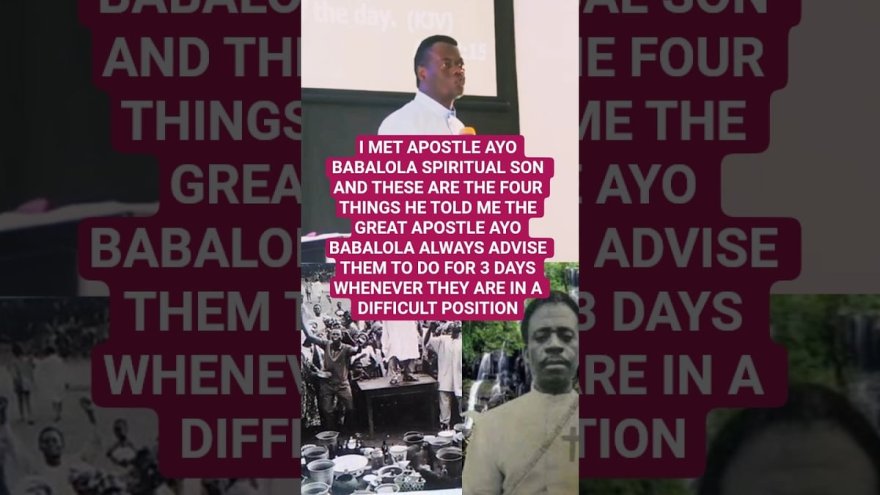
Joseph Ayodele Babalola was a Nigerian Christian minister and the founder of the Christ Apostolic Church, known in Nigeria as CAC. He was born on April 25, 1904, in Odo-Owa, Kwara State, and became one of the most influential figures in the Aladura religious movement before his death on July 26, 1959.
What Was Ayodele Babalola’s Full Name?
Ayodele Babalola’s full name is Joseph Ayodele Babalola. He is also referred to as Joseph Ayo Babalola in several historical records. Followers of the Christ Apostolic Church commonly refer to him simply as Baba or Apostle Babalola.
Where Was Ayodele Babalola Born?
Babalola was born in Odo-Owa, a small town in the Oke-Ero area of present-day Kwara State, Nigeria. The town sits roughly ninety kilometres from Ilorin. At the time of his birth, the area fell under the Southern Nigeria Protectorate, before Nigeria’s independence.
What Was Ayodele Babalola’s Family Background?
Babalola was born to David Rotimi and Madam Martha Talabi, a couple who belonged to the Anglican Church. His father served as the Baba Ijo, meaning church father, of the Church Missionary Society in their community. The family raised Babalola within a devout Anglican household from an early age.
Did Babalola Marry and Have Children?
Yes. Babalola’s partner was Dorcas Babalola. Records list one child, a daughter named Apeke Adeniyi.
What Was Ayodele Babalola’s Early Career?
Babalola left elementary school and took up employment with the Public Works Department. He worked as a steamroller operator for the department’s highway construction division, a job unrelated to religious ministry at the time.
How Did Babalola Begin His Ministry?
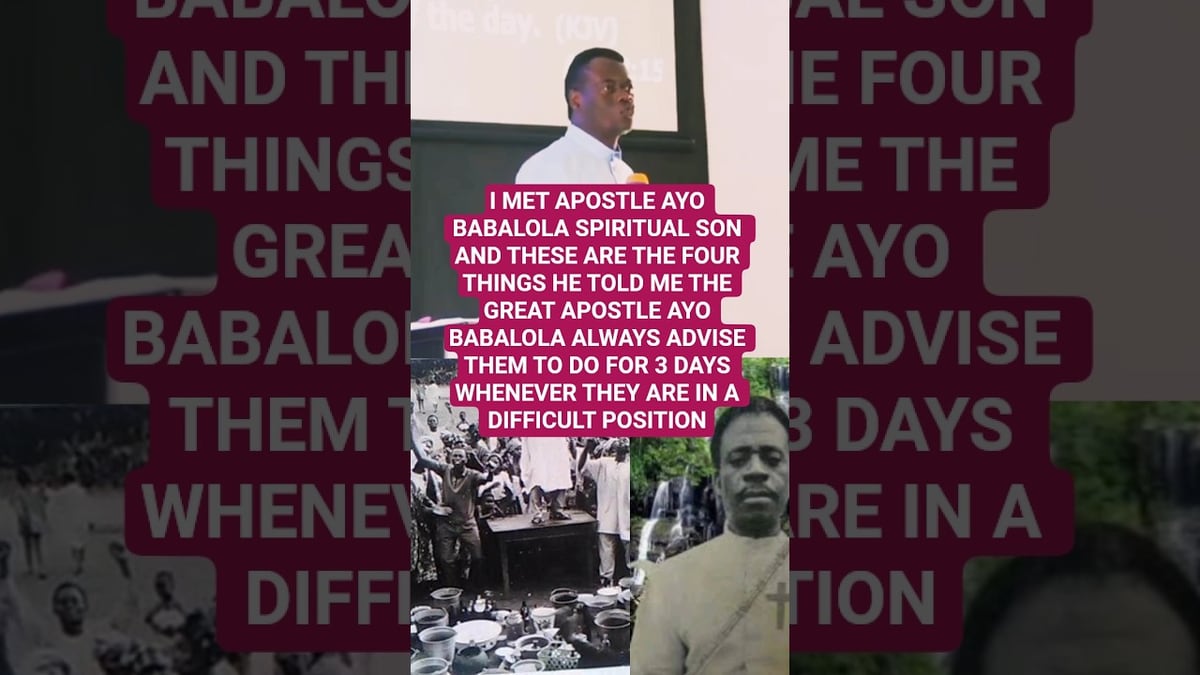
Babalola’s calling to ministry began through a dramatic personal experience. In October 1928, while attempting to repair his steamroller machine, he said Jesus Christ called him to abandon his job and begin preaching the Gospel.
His initial response to this experience brought him hardship rather than acceptance. He returned home after the vision, where community members judged him to be mad and briefly imprisoned him. He eventually made his way back to Lagos, where he joined Faith Tabernacle, an independent Yoruba church that had broken away from the Anglican Church.
What Was Faith Tabernacle’s Connection to American Pentecostalism?
Faith Tabernacle, the church Babalola joined in Lagos, maintained ties to an American Pentecostal organization. This connection placed Babalola within a wider network of independent African churches emerging in the early twentieth century.
What Was the Oke-Oye Revival?
Babalola led a major religious revival that became known as the Oke-Oye Revival. The revival began in Ilesa and later spread across a wide area. Examples include Ibadan, Ijebu, Lagos, Efon-Alaaye, Aramoko Ekiti, and Abeokuta.
The scale of the revival drew massive crowds during its peak. Attendance at one revival meeting reportedly rose to about 40,000 people, a gathering many Christ Apostolic Church members regard as unmatched by any revival before it.
What Miracle Is Babalola Credited With?
In September 1930, Babalola was credited with raising a dead man back to life. This event significantly boosted his public profile and reputation as a healing evangelist across Yorubaland.
What Did Babalola Preach During the Revival?
Babalola toured Yorubaland and eastern Nigeria carrying a bell and a Yoruba Bible. His preaching centered on several core themes. Examples include repentance, renunciation of idolatry, the importance of prayer and fasting, and the power of God to heal sickness.
He also took a firm stance against traditional religious practices during his revival campaigns. He attacked traditional religious practices directly, burning fetishes, idols, and witchcraft paraphernalia in large bonfires, and he forbade polygamy among his followers.
Who Were Babalola’s Early Disciples?
Several men became close disciples of Babalola during the revival period. Examples include Daniel Orekoya, Peter Olatunji from Okeho, and a preacher known as Aladura Omotunde from Aramoko Ekiti. These men drew significant inspiration from Babalola’s ministry and went on to lead revivals of their own, including Orekoya, who sparked a major revival in Ibadan at Oke-Bola.
How Did the Christ Apostolic Church Form?
The organization that became the Christ Apostolic Church traces its roots to an earlier group called the Precious Stone Society, founded in Ijebu-Ode in 1918. In 1930, Faith Tabernacle affiliated with the Apostolic Church, a denomination headquartered in the United Kingdom.
A split within the Apostolic Church around 1940 led to the formation of an independent Nigerian church. Babalola joined a group led by Pastors J.B. Akinyele and D.O. Odubanjo to form the Christ Apostolic Church, which was formally established in 1941. The church regards Babalola as an apostle, though he was never formally ordained into that office.
Who Were the Other Founders of the Christ Apostolic Church?
The Christ Apostolic Church’s history is linked to several founding figures beyond Babalola. Examples include Isaac Babalola Akinyele, David Odubanjo, Joseph Esinsinade, and Sophia Odunlami.
Did Babalola Face Trouble With Colonial Authorities?
Babalola’s conflict with colonial authorities remained limited compared to other African independent church leaders of his era. He was jailed briefly on suspicion of participating in a witch eradication campaign, but this represented the extent of his confrontation with the government. Because the Christ Apostolic Church had no political doctrine and focused purely on spirituality, colonial authorities did not target it the way they targeted movements led by figures like William Wadé Harris in Ghana or Simon Kimbangu in the Belgian Congo.
How Did Ayodele Babalola Die?
Babalola died on July 26, 1959, in Ede, in Nigeria’s Western Region, now part of Osun State. He was 55 years old at the time of his death. He continued his healing and evangelistic work within the Christ Apostolic Church until his death.
Where Is Babalola Buried?
Babalola’s remains rest at the Grave Prayer House Mausoleum in Efon-Alaiye, Ekiti State, Nigeria. The site remains a place of religious significance for members of the Christ Apostolic Church.
What Is Ayodele Babalola’s Legacy?
Babalola is remembered as one of the most important figures in the history of African Christianity. His revival ministry is regarded by the Christ Apostolic Church as the founding moment of the denomination, and a CAC retreat center was built at Ipo Arakeji, Osun State, at the site where he was first called to ministry in 1928.
The church he helped establish grew into one of Nigeria’s largest indigenous Pentecostal movements. Millions of members across Nigeria and beyond continue to follow the Christ Apostolic Church today, with Babalola’s emphasis on prayer, fasting, and reliance on the Holy Spirit remaining a cornerstone of the denomination’s spiritual practice.
Ayodele Babalola Quick Facts
| Category | Details |
|---|---|
| Full name | Joseph Ayodele Babalola |
| Date of birth | April 25, 1904 |
| Birthplace | Odo-Owa, Kwara State, Nigeria |
| Date of death | July 26, 1959 |
| Age at death | 55 |
| Place of death | Ede, Western Region (now Osun State) |
| Resting place | Grave Prayer House Mausoleum, Effon-Alaiye, Ekiti State |
| Occupation | Apostle, preacher, healing evangelist |
| Known for | Founding the Christ Apostolic Church |
| Movement | Aladura |
| Partner | Dorcas Babalola |
| Children | Apeke Adeniyi |
Final Summary
Joseph Ayodele Babalola moved from a career as a steamroller operator to becoming one of the most consequential religious figures in twentieth-century Nigerian history. His Oke-Oye Revival, marked by mass gatherings and reported healings, gave rise to the Christ Apostolic Church, a denomination that remains one of Nigeria’s largest indigenous Pentecostal movements decades after his death.