SEO Title: Khulafa’u Rashidun: Brief Life History of the 4 Rightly Guided Caliphs Meta Description: Khulafa’u Rashidun biography covering Abu Bakr, Umar, Uthman, and Ali, the 4 Rightly Guided Caliphs, their succession, reigns, and major achievements.
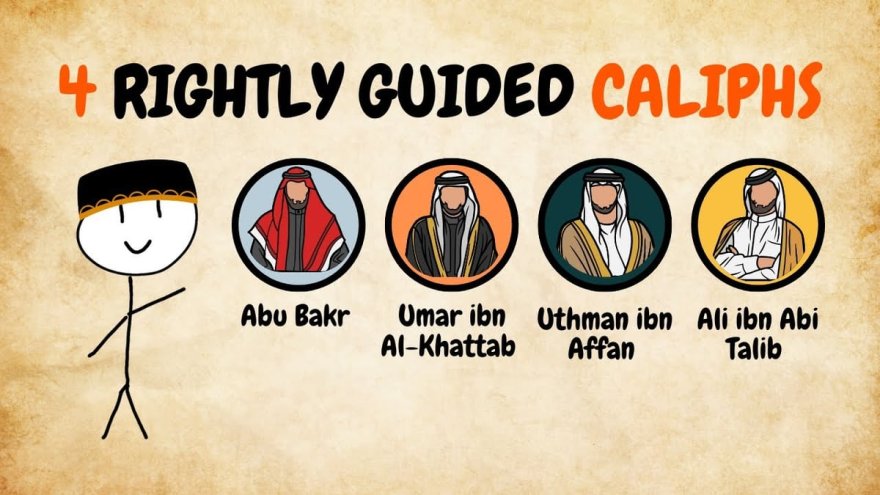
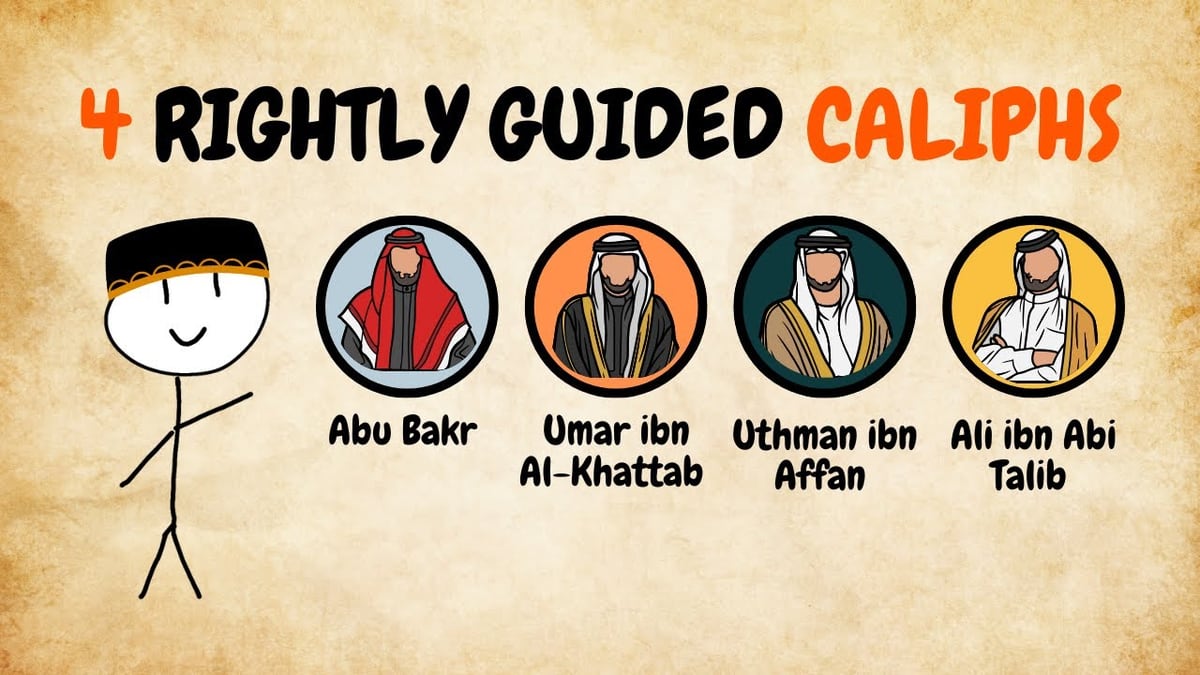
The Khulafa’u Rashidun, or Rightly Guided Caliphs, were the first 4 leaders of the Muslim community following the death of Prophet Muhammad in 632 CE. The 4 caliphs are Abu Bakr, Umar ibn al-Khattab, Uthman ibn Affan, and Ali ibn Abi Talib, who together governed for 29 years. This is a brief life history of each caliph, their succession, and their major achievements.
Who Were the Khulafa’u Rashidun?
The Khulafa’u Rashidun were the first 4 successors to Prophet Muhammad, governing the early Muslim community from 632 to 661 CE. The term “Rashidun” is Arabic for “Rightly Guided,” a designation used within Sunni Islam.
Sunni Muslims regard the 29-year period of the Rashidun as a model era, during which the Muslim community closely followed Muhammad’s example. Shia Muslims, who make up 10 to 15% of the global Muslim population, recognise only Ali as a legitimate successor to Muhammad and do not use the term Rashidun for the first 3 caliphs.
What Does “Khulafa’u Rashidun” Mean?
“Khulafa’u Rashidun” translates from Arabic as “Rightly Guided Caliphs,” combining “khulafa,” meaning successors, with “rashidun,” meaning rightly guided. The singular form of khulafa is khalifa, meaning caliph or successor.
The term reflects the Sunni Islamic view that these 4 leaders governed in close alignment with the Quran and the Sunnah, the teachings and practices of Muhammad.
Who Was Abu Bakr, the First Caliph?
Abu Bakr was the first Rashidun caliph, ruling from 632 to 634 CE after being elected by a group of Muhammad’s companions following the Prophet’s death. He was a close companion and father-in-law of Muhammad.
His 2-year reign focused on preserving the unity of the Muslim community. He led the Ridda Wars, a series of campaigns against tribes that had renounced allegiance to Islam following Muhammad’s death, successfully restoring the cohesion of the early Muslim state across the Arabian Peninsula.
What Did Abu Bakr Achieve as Caliph?
Abu Bakr’s key achievement was consolidating the Muslim community through the Ridda Wars, ensuring Islam’s continuity after Muhammad’s death. He also began the process of compiling written portions of the Quran under the guidance of the scholar Zayd ibn Thabit.
Before his death in 634 CE, Abu Bakr nominated Umar ibn al-Khattab as his successor, a decision accepted by the Muslim community without formal election.
Who Was Umar ibn al-Khattab, the Second Caliph?
Umar ibn al-Khattab was the second Rashidun caliph, ruling from 634 to 644 CE, and is credited with the rapid territorial expansion of the early Islamic state. He was appointed by Abu Bakr shortly before the first caliph’s death.
During his 10-year reign, Rashidun forces defeated the Byzantine Empire at the Battle of Yarmouk in 636 CE and conquered the Sasanian Empire, extending Muslim territory across the Levant, Egypt, and Persia.
What Did Umar Achieve as Caliph?
Umar established administrative and welfare systems, including a system of allowances for children and the elderly, funded through zakat taxation. He is credited with founding some of the earliest structured governance systems in the Islamic state.
Umar was fatally wounded by an assassin in 644 CE. Before his death, he appointed a 6-member committee to select his successor rather than naming one directly.
Who Was Uthman ibn Affan, the Third Caliph?
Uthman ibn Affan was the third Rashidun caliph, ruling from 644 to 656 CE, selected by the committee appointed by Umar. He belonged to the Umayyad clan of the Quraysh tribe and was known as “Al-Ghani,” meaning “The Generous.”
His 12-year reign is most notably associated with the standardisation of the written Quran, an effort undertaken to preserve a single, consistent text across the expanding Islamic territories.
How Did Uthman’s Reign End?
Uthman’s reign ended in 656 CE when he was killed by rebels in Medina, following growing disaffection with his administrative policies in Kufa, Basra, and Egypt. His death marked the beginning of significant internal conflict within the early Muslim community.
His assassination directly preceded the succession of Ali ibn Abi Talib as the fourth caliph, a transition that occurred during a period of heightened political tension.
Who Was Ali ibn Abi Talib, the Fourth Caliph?
Ali ibn Abi Talib was the fourth Rashidun caliph, ruling from 656 to 661 CE, and is recognised by Shia Muslims as the first rightful successor to Muhammad. He was Muhammad’s cousin and son-in-law, married to Muhammad’s daughter Fatima.
His nearly 5-year reign was marked largely by internal civil conflict within the Muslim community, rather than territorial expansion, as competing factions disputed the legitimacy of his leadership following Uthman’s assassination.
How Did Ali’s Reign End?
Ali’s reign ended in 661 CE when he was assassinated in Kufa, concluding the 29-year period of the Rashidun Caliphate. His death led to the rise of Muawiya I and the beginning of the Umayyad Caliphate.
Ali holds a distinct position in Islamic history as both the fourth Rashidun caliph in Sunni tradition and the first Imam in Shia Islam, a duality that reflects the broader theological divide over rightful succession following Muhammad’s death.
What Is the Timeline of the Khulafa’u Rashidun?
The Khulafa’u Rashidun governed in direct succession over a 29-year period, from Abu Bakr’s election in 632 CE to Ali’s assassination in 661 CE. The table below summarises each caliph’s reign and method of succession.
| Caliph | Reign (CE) | Duration | Method of Succession |
|---|---|---|---|
| Abu Bakr | 632 to 634 | 2 years | Elected by companions of Muhammad |
| Umar ibn al-Khattab | 634 to 644 | 10 years | Nominated by Abu Bakr |
| Uthman ibn Affan | 644 to 656 | 12 years | Selected by a 6-member committee |
| Ali ibn Abi Talib | 656 to 661 | 5 years | Acclaimed following Uthman’s assassination |
Each transition of power followed a different method, reflecting the absence of a fixed system of succession during the early Islamic period.
What Were the Major Achievements of the Khulafa’u Rashidun?
The major achievements of the Khulafa’u Rashidun include the conquest of the Sasanian Empire, the compilation and standardisation of the Quran, the establishment of early welfare systems, and the expansion of Muslim territory across 3 continents. These achievements occurred primarily during the reigns of Abu Bakr, Umar, and Uthman.
The 4 major achievements in order:
- Territorial expansion: The Rashidun Caliphate conquered the entire Arabian Peninsula, the full Sasanian Empire, and roughly two-thirds of Byzantine territory within 24 years.
- Quranic preservation: Abu Bakr began compiling written portions of the Quran, and Uthman later standardised a single authoritative text.
- Welfare administration: Umar introduced allowances for children and the elderly, funded through zakat, forming one of the earliest structured welfare systems in recorded history.
- Governance precedent: The Rashidun period established early models of consultation (shura) and succession that later Islamic political theory continued to reference.
People Also Ask About the Khulafa’u Rashidun
How many Khulafa’u Rashidun were there? There were 4 Khulafa’u Rashidun: Abu Bakr, Umar ibn al-Khattab, Uthman ibn Affan, and Ali ibn Abi Talib.
How long did the Khulafa’u Rashidun rule? The Khulafa’u Rashidun ruled for a combined period of 29 years, from 632 CE to 661 CE.
Why are they called “Rightly Guided” caliphs? Sunni Muslims describe the first 4 caliphs as “Rightly Guided” because their governance is considered to have closely followed the teachings and example of Prophet Muhammad.
Which caliph compiled the Quran? Abu Bakr began the initial compilation of written Quranic material, and Uthman later standardised it into a single authoritative text during his reign.
What happened after the Khulafa’u Rashidun? The Rashidun Caliphate ended with Ali’s assassination in 661 CE, after which Muawiya I established the Umayyad Caliphate.
What Is the Legacy of the Khulafa’u Rashidun?
The legacy of the Khulafa’u Rashidun rests on their role in consolidating early Islamic governance, preserving the Quran, and expanding Muslim territory across the Arabian Peninsula, Persia, and parts of the Byzantine Empire. Their 29-year period remains a central reference point in Islamic political and religious history.
From Abu Bakr’s consolidation of the Muslim community to Ali’s leadership through internal conflict, the Khulafa’u Rashidun shaped the foundational structures of governance, religious text preservation, and territorial expansion that defined the early Islamic state.