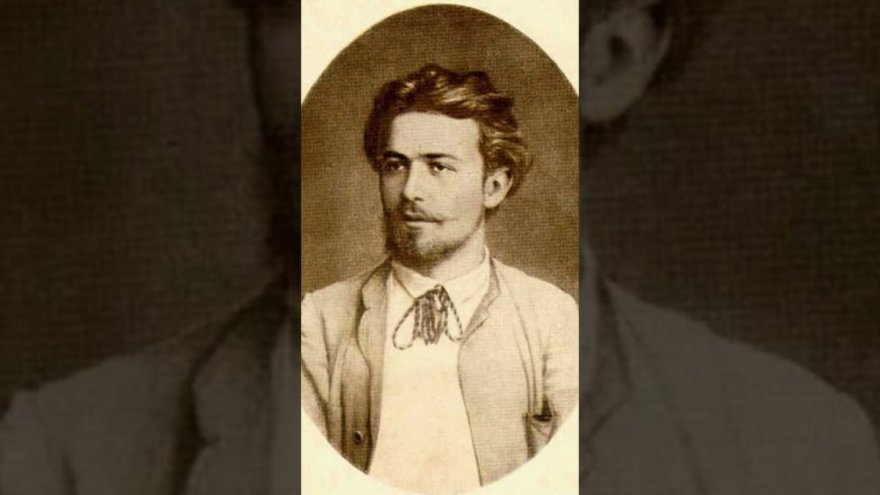
Title: Full Life and History of Anton Chekhov: Career, Plays, and Legacy
Who Was Anton Chekhov?
Anton Chekhov was a Russian physician, short story writer, and playwright, widely regarded as a master of the modern short story and one of the leading dramatists of the late 19th and early 20th centuries. He practiced medicine throughout much of his adult life while writing nearly 600 stories and 17 plays, including “The Seagull,” “Uncle Vanya,” “Three Sisters,” and “The Cherry Orchard.”
Chekhov is known for a restrained, realistic writing style that avoided moralizing and melodrama, focusing instead on ordinary characters and the quiet significance of everyday events.
What Was Anton Chekhov’s Childhood Like?
Anton Pavlovich Chekhov was born on January 29, 1860, in Taganrog, a seaport town in southern Russia on the Sea of Azov. He was the third of 6 children born to Pavel Chekhov, a grocer, and Yevgeniya Chekhov, who nurtured his early love of storytelling.
Chekhov’s grandfather had been a serf who bought his family’s freedom in 1841. His father ran the household strictly, combining religious devotion with harsh discipline, and required young Chekhov to work long hours in the family shop and sing in the church choir.
In 1876, when Chekhov was 16, his father’s grocery business failed under the threat of debtor’s prison. The family fled to Moscow to avoid arrest, leaving Chekhov alone in Taganrog for about 3 years to finish school. He supported himself during this period by tutoring younger students and selling off the family’s remaining household goods.
How Did Anton Chekhov Become Both a Doctor and a Writer?
Anton Chekhov joined his family in Moscow in 1879 and enrolled immediately in Moscow University’s medical faculty. He graduated as a doctor in 1884.
While studying medicine, Chekhov became the main financial support for his family. He wrote short comic sketches and anecdotes for humor magazines under pseudonyms, most famously “Antosha Chekhonte,” combining freelance writing with demanding medical coursework. He later summarized this dual identity with a line he became known for: “Medicine is my lawful wife, and literature is my mistress.”
What Was Anton Chekhov’s Early Writing Career?
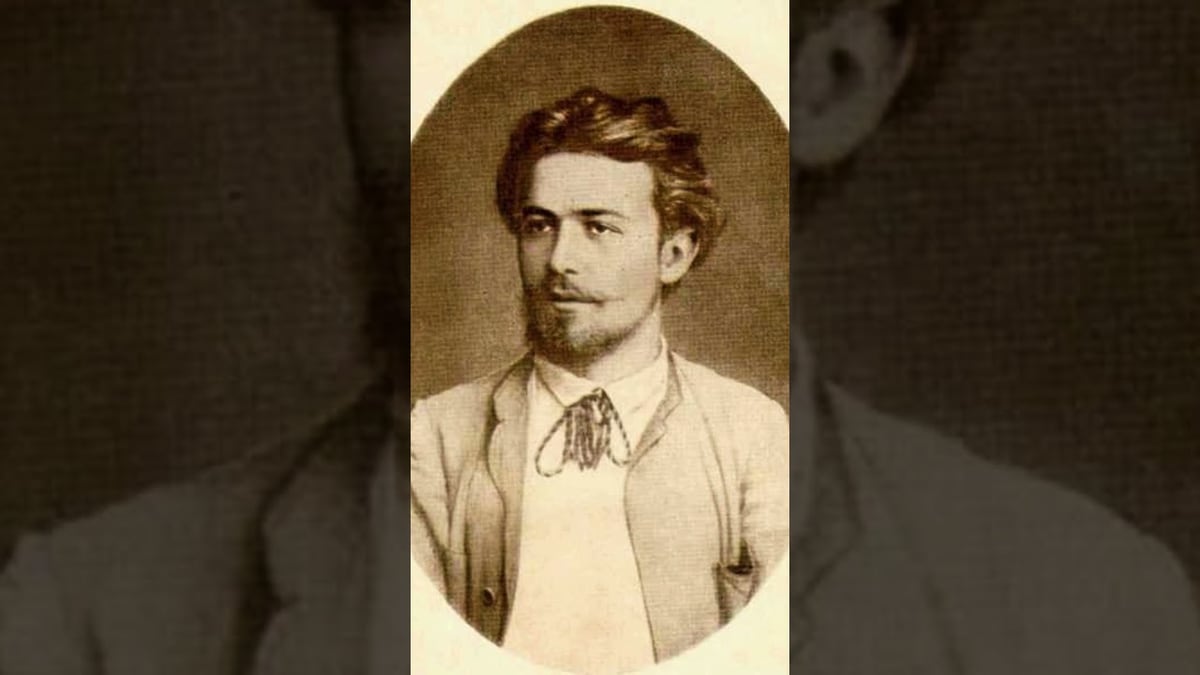
Anton Chekhov’s early stories were mostly comic and lighthearted, written quickly for magazine deadlines. His tone shifted toward realism in the mid-1880s, and his 1886 collection “In the Twilight” reflected this more serious direction.
In 1888, the Russian Academy of Sciences awarded Chekhov the Pushkin Prize, and established writers Leo Tolstoy and Nikolai Leskov praised his work. That same year, his play “The Wood Demon” was rejected by the St. Petersburg Theatrical Committee, a setback that discouraged him from playwriting for several years. Chekhov’s brother Nikolai, a talented painter, died of tuberculosis that same summer, a loss that shaped the mood of his 1889 story “A Dreary Story,” about a dying professor reflecting on a life he considers pointless.
What Are Anton Chekhov’s Most Famous Short Stories?
Anton Chekhov’s most acclaimed short stories include “The Steppe,” “Ward No. 6,” “The Lady with the Dog,” and “The Bishop,” written across different stages of his career.
“The Steppe” (1888) follows a boy’s journey across the Russian countryside and marked Chekhov’s move toward longer, more literary fiction. “Ward No. 6” (1892) examines a provincial asylum and has been read as a commentary on indifference and institutional cruelty in Russian society. “The Lady with the Dog” (1899), often ranked among his finest stories, follows a quiet, unresolved love affair between two unhappily married people. These stories are frequently credited with shaping the modern short story form, particularly its use of understatement and open, unresolved endings rather than neat moral conclusions.
Why Did Anton Chekhov Travel to Sakhalin Island?
Anton Chekhov traveled to Sakhalin Island, a Russian penal colony in the Far East, in 1890 to study the conditions of prisoners held there.
He surveyed thousands of convicts and settlers during his time on the island, gathering material for a detailed sociological study. The resulting book, “The Island of Sakhalin,” was published in 1893 and 1894, documenting the harsh conditions of the Russian penal system. Decades later, Aleksandr Solzhenitsyn cited Chekhov’s research in “The Gulag Archipelago,” his own account of the Soviet prison camp system.
What Are Anton Chekhov’s Most Famous Plays?
Anton Chekhov wrote 4 major plays that remain his best-known works: “The Seagull,” “Uncle Vanya,” “Three Sisters,” and “The Cherry Orchard.”
“The Seagull” premiered in 1896 to a hostile audience and was considered a failure. Constantin Stanislavski’s Moscow Art Theatre revived the play in 1898 to great success, a turning point that established Chekhov as a major dramatist and began his close working relationship with the theatre. “Uncle Vanya” followed in 1899, “Three Sisters” in 1901, and “The Cherry Orchard,” his final play, premiered in January 1904, just months before his death.
In 1892, Chekhov purchased a country estate at Melikhovo, outside Moscow, where he wrote several of these works and continued to practice medicine among the local peasantry, often treating patients without charge. During a cholera epidemic that same year, he organized medical relief stations across the district and worked as a district physician to help contain the outbreak, alongside his writing.
Who Did Anton Chekhov Marry?
Anton Chekhov married Olga Knipper in 1901. She was an actress with the Moscow Art Theatre who had starred in the revival of “The Seagull” and went on to perform in his other major plays.
The marriage came late in Chekhov’s life, after years of declining health, and the couple spent much of their time apart due to his worsening illness and her ongoing stage career in Moscow.
How Did Anton Chekhov Die?
Anton Chekhov died of tuberculosis on July 15, 1904, at a health resort in Badenweiler, Germany, where he had gone seeking treatment. He was 44 years old. According to a widely repeated account from those present, his doctor offered him a glass of champagne, a customary gesture for a dying patient at the time, and Chekhov drank it before he died.
Chekhov had shown signs of tuberculosis since his youth, though he avoided formal treatment for years despite his medical training. His health declined sharply in his final years, prompting his move from Melikhovo to the warmer climate of Yalta, in Crimea, after his father’s death. He was buried in Moscow following his death in Germany.
What Is Anton Chekhov’s Legacy?
Anton Chekhov’s legacy rests on his influence over both the modern short story and modern drama. His restrained, understated style shaped generations of later writers who moved away from explicit moral commentary toward subtler character study.
In drama, Chekhov is closely associated with the principle known as “Chekhov’s gun,” which holds that every element introduced into a story serves the plot, often illustrated using a gun that appears early in a scene and is expected to be fired before the story ends. His four major plays remain part of the standard world theater repertoire more than a century after his death, translated into dozens of languages and staged continuously since the Moscow Art Theatre first revived them. His short stories are similarly taught as models of the form, and his emphasis on subtext and quiet emotional detail influenced generations of later playwrights and fiction writers well beyond Russia.
Anton Chekhov FAQs
How Many Plays and Stories Did Anton Chekhov Write?
Anton Chekhov wrote about 17 plays and nearly 600 short stories over the course of his career.
What Is Anton Chekhov Best Known For?
Anton Chekhov is best known for his short stories and for 4 major plays: “The Seagull,” “Uncle Vanya,” “Three Sisters,” and “The Cherry Orchard.”
What Nationality Was Anton Chekhov?
Anton Chekhov was Russian. He was born in Taganrog, in southern Russia, and spent most of his life in Moscow, Melikhovo, and Yalta.