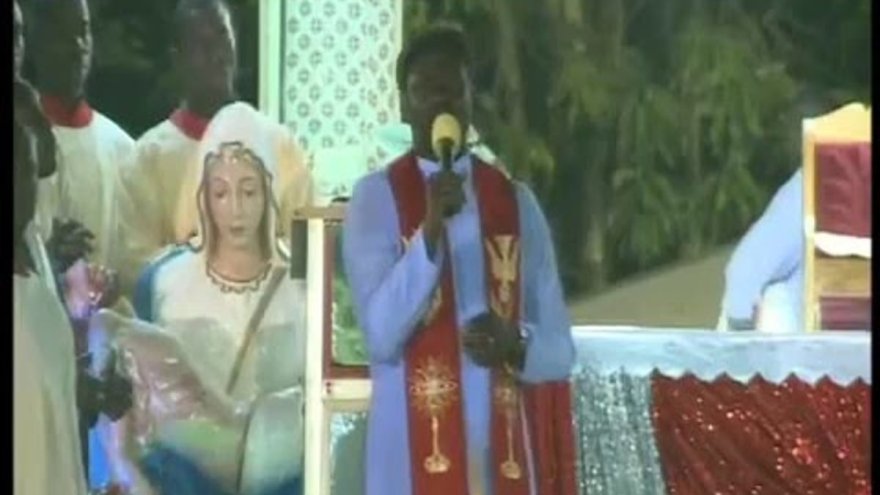
Fr. Emmanuel Obimma, widely known as Ebube Muonso, is a Nigerian Catholic priest born on 18 August 1980 in Uruebo village, Nkwelle-Ezunaka, Anambra State. He is the founder and Spiritual Director of Holy Ghost Adoration Ministry in Uke, Anambra State, one of the largest Catholic adoration ministries in Nigeria.
Who Is Fr. Emmanuel Obimma?
Fr. Emmanuel Obimma, full name Chibuzo Emmanuel Obimma, is a Nigerian Catholic priest, parish priest, and founder of the Holy Ghost Adoration Ministry, widely known by his nickname Ebube Muonso. He currently serves as the Parish Priest of Blessed Iwene Tansi Parish in Umudioka, Dunukofia Local Government Area of Anambra State.
He is recognised across Anambra State and beyond for his passionate preaching, prayer ministry, healing sessions, and his outspoken commentary on social and political issues affecting ordinary Nigerians.
When and Where Was Fr. Emmanuel Obimma Born?
Fr. Emmanuel Obimma was born on 18 August 1980 in Uruebo village, Nkwelle-Ezunaka, Anambra State, in Southeastern Nigeria. He is the youngest of 7 sons born to Bartholomew Obiechina Obimma, a tailor, and Grace Obimma (Ochiora), a clothing seller.
| Detail | Information |
|---|---|
| Full name | Chibuzo Emmanuel Obimma |
| Popular nickname | Ebube Muonso (“Glory of the Holy Ghost”) |
| Date of birth | 18 August 1980 |
| Place of birth | Uruebo village, Nkwelle-Ezunaka, Anambra State |
| Ordination date | 6 August 2011 |
| Ordaining archdiocese | Onitsha Archdiocese |
| Current parish | Blessed Iwene Tansi Parish, Umudioka, Dunukofia |
| Founded ministry | Holy Ghost Adoration Ministry, Uke, Anambra State |
His late father, Bartholomew Obiechina Obimma, and his mother, Grace Obimma, both worked in trade and craft occupations in Nkwelle-Ezunaka, where he spent his early formative years.
What Is Fr. Emmanuel Obimma’s Educational Background?
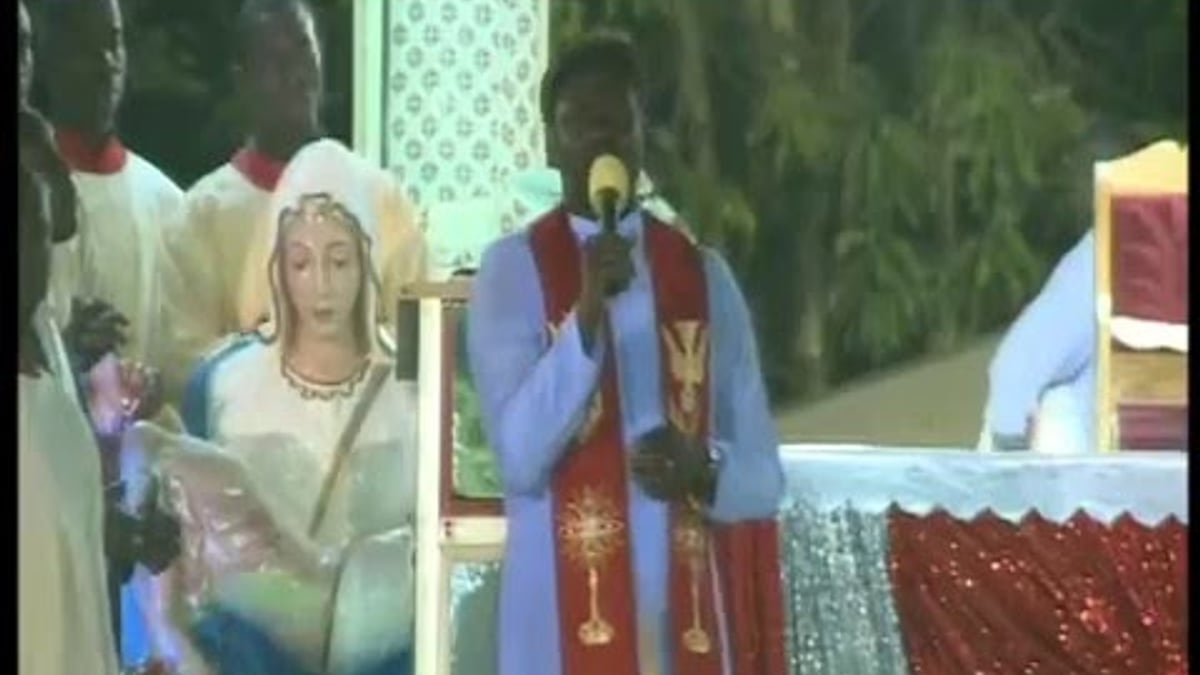
Fr. Emmanuel Obimma attended Ezunaka Primary School before completing his junior secondary education at St. Paul’s Seminary in Ukpor and his senior secondary education at All Hallows Seminary in Onitsha. His path into priestly formation began early through this seminary-based education.
He went on to study at Pope John Paul Major Seminary in Awka and later at Blessed Iwene Tansi Major Seminary in Onitsha, where he completed his formal priestly training. His path to ordination was not without difficulty. Three of his elder brothers had previously entered seminary training for the priesthood but did not complete their studies, and Obimma himself was placed on a year of suspension and probation during his own formation.
How Did Fr. Emmanuel Obimma Get the Name Ebube Muonso?
Fr. Emmanuel Obimma acquired the nickname Ebube Muonso, meaning “Glory of the Holy Ghost,” while he was still in seminary. He has stated publicly that the name was not self-given, but was assigned to him spontaneously by people who began using it after his ordination.
According to Obimma’s own account, the name took hold once he began his healing ministry as a newly ordained priest. Members of the public who witnessed his early prayer and healing sessions began referring to him as Ebube Muonso, and the name has remained attached to his public identity ever since.
When Was Fr. Emmanuel Obimma Ordained a Priest?
Fr. Emmanuel Obimma was ordained a Catholic priest on 6 August 2011 within the Onitsha Archdiocese. His ordination followed years of seminary formation that included a period of suspension, a detail he has openly acknowledged as part of his personal journey toward the priesthood.
3 stages marked his path from seminary to ordained ministry:
- Early seminary formation: Completed at St. Paul’s Seminary, Ukpor, and All Hallows Seminary, Onitsha.
- Major seminary studies: Undertaken at Pope John Paul Major Seminary, Awka, and Blessed Iwene Tansi Major Seminary, Onitsha.
- Ordination and early assignments: Ordained in August 2011, followed by a brief period as a relief priest at St. Dominic’s Catholic Church in Uke, and later appointment as a vicar at St. Charles Borromeo parish in Onitsha.
How Did Fr. Emmanuel Obimma Found Holy Ghost Adoration Ministry?
Fr. Emmanuel Obimma founded Holy Ghost Adoration Ministry in Uke, Anambra State, following a conflict with the parish priest at St. Charles Borromeo, where he had been serving as vicar. This disagreement led him to establish an independent adoration ministry that would go on to become one of the largest of its kind in the Onitsha diocese.
Since its founding, the ministry has grown substantially. As of 2020, it was recognised as the largest adoration ministry within the Onitsha diocese, drawing thousands of worshippers to its prayer grounds in Uke each week.
How Large Is Holy Ghost Adoration Ministry Today?
Holy Ghost Adoration Ministry draws thousands of worshippers weekly and, according to reports, employs almost 20,000 people across its associated schools and factories. The ministry’s growth has extended well beyond religious worship into education and employment within Anambra State.
3 areas of impact associated with the ministry:
- Education: Fr. Obimma has built 2 schools, with more than 50% of enrolled students receiving scholarships. He also trains seminarians across different seminaries in Anambra State.
- Employment: The ministry’s associated schools and factories are reported to employ close to 20,000 people.
- International reach: He formed the Holy Ghost Fraternity, a prayer movement reported to have over 20 million members across countries including the United States, the United Kingdom, and South Africa.
What Is Fr. Emmanuel Obimma’s Public Reputation?
Fr. Emmanuel Obimma is widely regarded as one of the most popular and, at times, controversial Catholic clerics in Anambra State, known for his passionate preaching style, reported healing ministry, and willingness to speak publicly on social and political matters affecting ordinary citizens.
Worshippers who attend his prayer sessions in Uke come from a wide range of backgrounds, including politicians, traders, civil servants, and artisans, seeking prayer for healing, economic breakthroughs, and spiritual guidance.
Has Fr. Emmanuel Obimma Been Involved in Social or Political Issues?
Yes. Fr. Emmanuel Obimma has publicly criticised Anambra State authorities on matters of insecurity, including a direct criticism of Governor Chukwuma Soludo in early 2025 over the state’s handling of kidnapping and crime. He has used his public platform to advocate for ordinary citizens facing inadequate protection from insecurity.
In December 2024, a fellow priest and close friend of Fr. Obimma, identified as Rev. Fr. Nonso, was kidnapped shortly after returning from a trip overseas. Fr. Obimma played a direct role in efforts to secure his release, and publicly criticised local police for inaction, alleging that officers demanded a payment of 1 million Naira for logistics before taking action on the case.
What Is Fr. Emmanuel Obimma’s Relationship With Other Nigerian Clerics?
Fr. Emmanuel Obimma has been publicly linked, at times through rumours of rivalry, to fellow Nigerian Catholic priest Fr. Ejike Mbaka, another prominent and outspoken cleric known for his own adoration ministry in Enugu State. Both priests have publicly denied any rivalry between them, clarifying that reports of tension were inaccurate.
Both clerics share a similar public profile within Nigeria’s Catholic community: high-profile adoration ministries, large followings, and a willingness to comment publicly on national and state-level social and political issues, a combination that has occasionally drawn scrutiny from within the Church and from the public.
Where Is Fr. Emmanuel Obimma Now?
Fr. Emmanuel Obimma continues to serve as Parish Priest of Blessed Iwene Tansi Parish in Umudioka, Dunukofia, while also leading Holy Ghost Adoration Ministry in Uke, Anambra State, as its Spiritual Director. His ministry continues to expand its reach through weekly worship sessions, educational institutions, and the wider international Holy Ghost Fraternity prayer movement.
His combination of pastoral duties, entrepreneurial ventures in education and employment, and vocal public commentary on social issues has established him as one of the most recognisable Catholic clerics operating in Southeastern Nigeria today.